
Why Elephants Are Drawn to Rasgulla Sugarcane

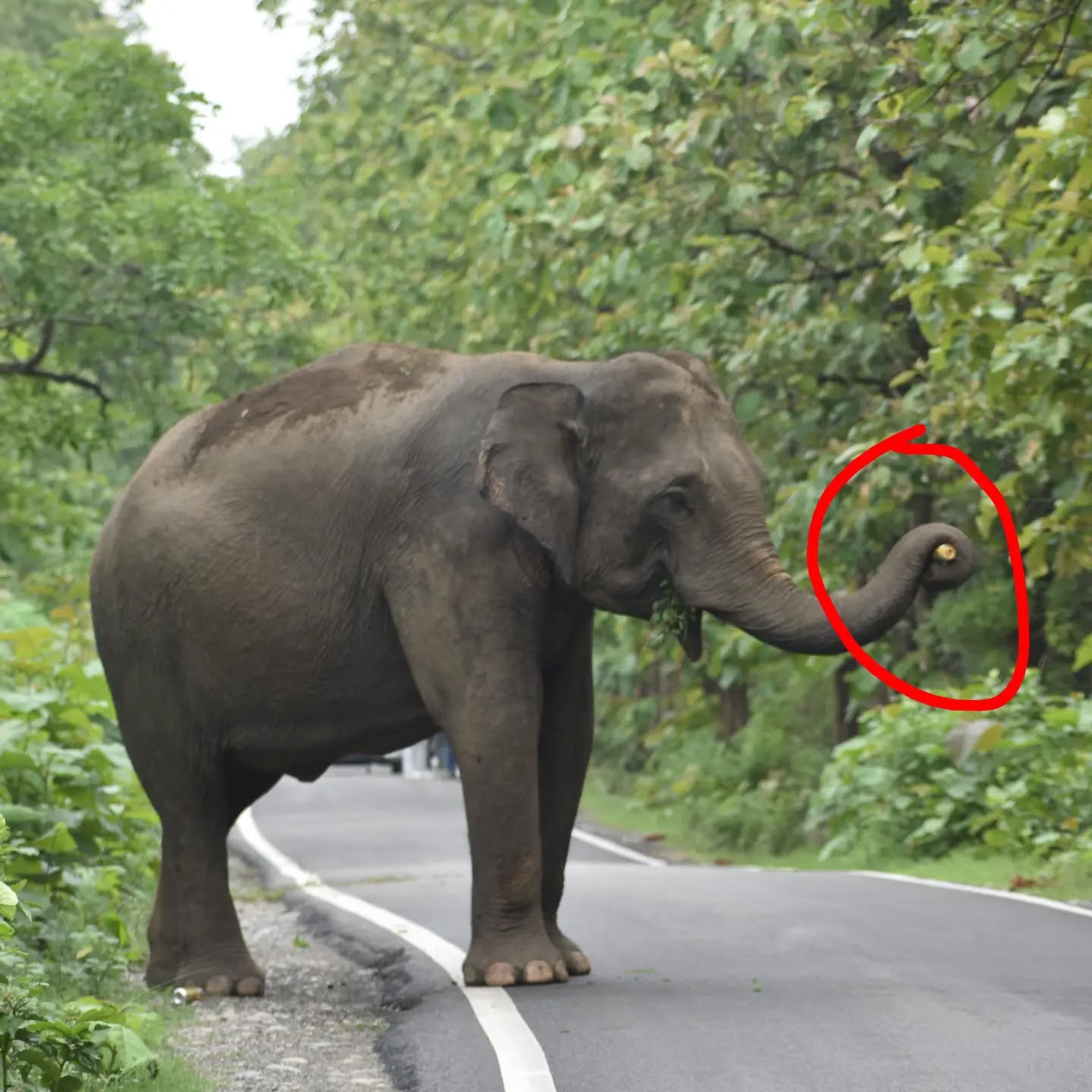
Elephants are intelligent, wide-ranging herbivores that depend on large quantities of food each day. An adult elephant consumes nearly 150–200 kg of vegetation daily, constantly searching for energy-rich and easily accessible forage. In landscapes like Doiwala and Chidderwala, the cultivation of Rasgulla sugarcane has unintentionally created a powerful attractant for these wildlife.
Team Nature's Buddy conducted a social survey in these areas, according to the villagers rasgulla sugarcane contains a high concentration of juice (rass) and sugar. From just 5 quintals of Rasgulla cane, about 1 quintal of juice is extracted, whereas ordinary sugarcane requires around 7 quintals to yield the same amount. For elephants, this means more calories, more sugar, and more energy from less effort. The cane’s soft fibre allows elephants to break and consume it quickly, making feeding efficient and rewarding.
Elephants also possess an exceptional sense of smell and long-term memory. Sweet crops like sugarcane can be detected from several kilometres away. Once a herd feeds in a Rasgulla sugarcane field, the location becomes imprinted in their memory. These feeding sites are revisited year after year and often shared across generations, gradually turning farms into regular elephant pathways.
Another factor is water efficiency. Rasgulla sugarcane requires less irrigation, allowing it to thrive near forest fringes and riverine areas where elephants naturally move. As natural forage inside forests declines due to fragmentation and seasonal shortages, such crops become reliable food sources outside protected areas.
Importantly, elephants do not distinguish between farmland and forest. They follow food, familiarity, and survival instincts. When high-sugar crops are planted along traditional elephant routes, conflict becomes inevitable.
Understanding elephant behaviour is key to reducing human–elephant conflict. The issue is not aggressive elephants, but high-attraction crops placed within elephant landscapes. Thoughtful crop planning, buffer zones, and community coordination can help ensure that elephants remain in forests—and farmers remain safe.



Comments